
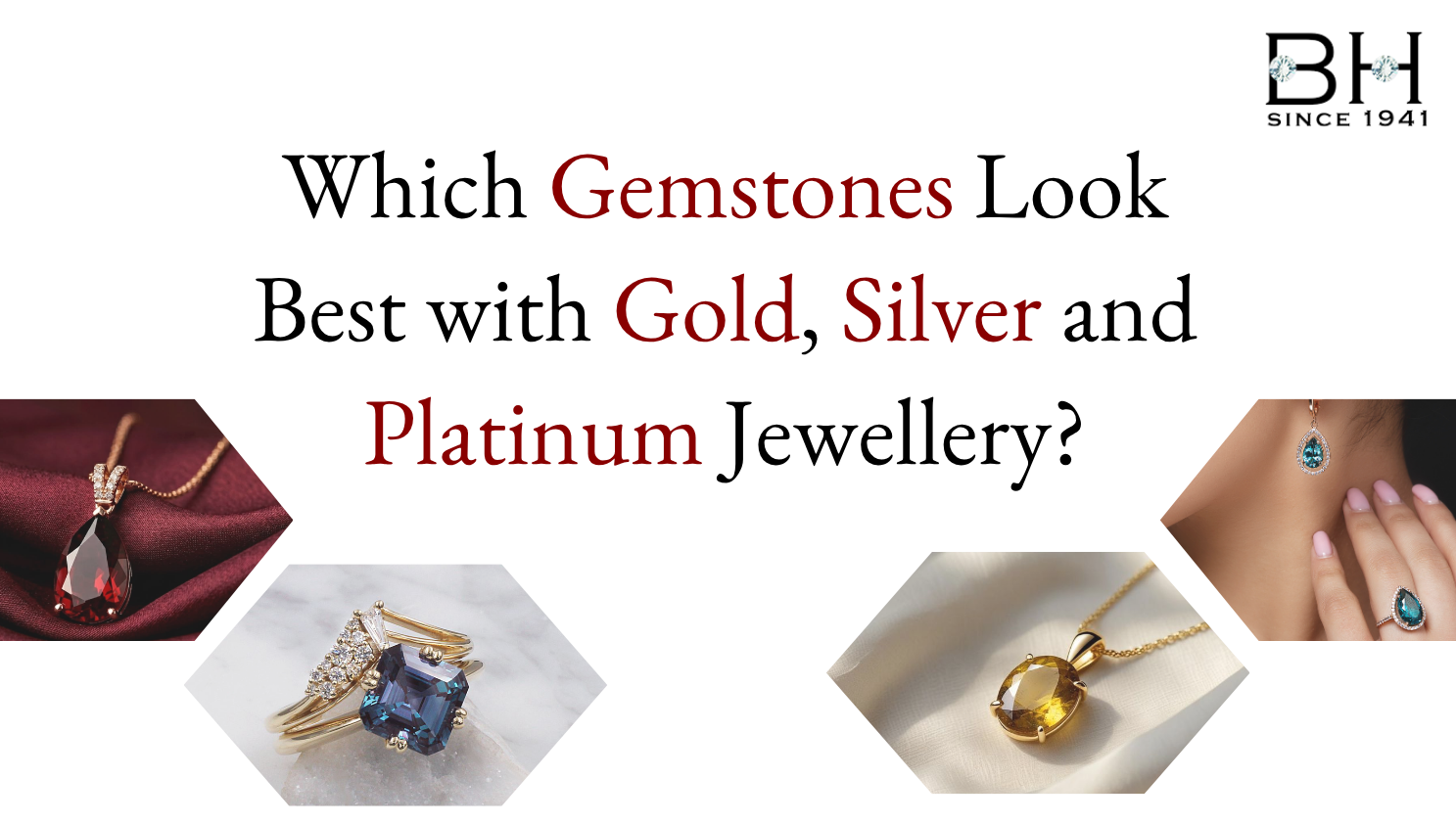
A gemstone can look completely different depending on the metal used to set it. A ruby surrounded by yellow gold creates a rich, traditional appearance, while a blue sapphire set in platinum offers a sleek and sophisticated look. Even the same emerald can appear warmer in gold and more contemporary in a white-metal setting.
Choosing the right combination of gemstones and metals is about more than aesthetics. Colour, jewellery design, durability and personal preference all influence how a finished piece looks and feels. Whether you are selecting a gemstone ring, buying a pendant or exploring jewellery for a special occasion, understanding these combinations can help you make a confident choice.
In this guide, we explore the best gemstones for gold, silver and platinum jewellery, explain which colours complement each metal, and share practical tips for choosing a combination that suits your style.
1. Best Gemstones for Gold Jewellery
Gold is a timeless choice for jewellery, appreciated for its warm appearance and versatility. Its golden tones complement rich gemstone colours, making it particularly suitable for traditional jewellery, statement pieces and occasion wear.
Here are some gemstones that pair beautifully with gold.
Ruby: A Bold and Regal Combination
Ruby is known for its vibrant red colour, which creates a striking contrast against yellow gold. The warm tones of the metal enhance the gemstone’s richness, giving the jewellery a classic and luxurious appearance.
Ruby and gold work well together in rings, pendants and statement necklaces. This combination is especially suitable for people who prefer traditional designs with a bold splash of colour.
Emerald: Rich Green Meets Golden Warmth
Emerald’s distinctive green colour looks beautiful against yellow gold. The contrast between the gemstone’s deep green shades and the metal’s warm finish creates an elegant combination.
Emeralds set in gold are suitable for rings, earrings and pendants. For a contemporary look, consider a simple setting that allows the gemstone to remain the centre of attention.
Blue Sapphire: A Striking Contrast
Blue sapphire is another excellent gemstone for gold jewellery. Its cool blue colour contrasts with yellow gold, creating a distinctive appearance that balances traditional warmth with vibrant colour.
This combination works well for statement rings and pendants. If you prefer a cooler, more understated appearance, blue sapphire can also be paired with white gold or platinum.
Yellow Sapphire and Citrine: Warm and Coordinated
Yellow sapphire and citrine complement the golden tones of yellow gold. Rather than creating a dramatic contrast, these gemstones produce a harmonious appearance.
They are suitable for people who prefer jewellery with coordinated colours and a warm finish. The final look will depend on the gemstone’s shade, cut and setting.
Best styling tip: Choose yellow gold when you want a warm, classic appearance. Ruby, emerald, yellow sapphire and citrine are excellent options, although the best combination depends on your preferred colour palette.
2. Best Gemstones for Silver Jewellery
Silver offers a cool, understated finish that works well with a wide range of gemstone colours. It is a popular choice for contemporary designs, everyday jewellery and pieces that place the gemstone at the centre of attention.
Its neutral appearance makes it particularly appealing for people who prefer minimalist or modern styles.
Amethyst: Elegant Purple Tones
Amethyst’s violet shades complement the cool sheen of silver. The combination creates a balanced appearance that works beautifully in rings, pendants and earrings.
Lighter purple stones can produce a delicate look, while deeper shades create a bolder effect. Silver settings are especially suitable for designs that emphasise the gemstone’s natural colour.
Aquamarine: Soft Blue Elegance
Aquamarine features pale blue tones that pair naturally with silver. The combination feels fresh and understated, making it suitable for delicate necklaces, everyday rings and contemporary jewellery.
If you prefer subtle colours over dramatic contrasts, aquamarine and silver can be an excellent choice.
Blue Topaz: Bright and Contemporary
Blue topaz stands out against silver because of its bright blue colour. Depending on the shade and cut, the finished jewellery can look playful, elegant or striking.
A simple setting helps highlight the gemstone without distracting from its colour. This pairing is suitable for both casual outfits and special occasions.
Moonstone: Soft and Distinctive
Moonstone is admired for its characteristic sheen, which can appear to shift as light moves across the surface. Silver provides a subtle background that complements this visual effect.
The combination works well in delicate rings, pendants and jewellery inspired by nature or vintage designs.
Best styling tip: Consider silver with amethyst, aquamarine, blue topaz or moonstone for a cool, understated appearance. However, warmer gemstones can also look attractive in silver settings when you want to create contrast.
3. Best Gemstones for Platinum Jewellery
Platinum is valued for its naturally white appearance, durability and refined finish. Unlike yellow gold, it does not introduce a strong warm colour into the design, allowing the gemstone to remain the main visual focus.
Platinum is commonly chosen for premium jewellery, engagement rings and pieces intended for frequent wear.
Blue Sapphire: Refined and Timeless
Blue sapphire pairs beautifully with platinum. The contrast between the gemstone’s rich blue colour and the metal’s cool, white finish creates a sophisticated appearance.
This combination suits both classic and contemporary designs. A simple setting highlights the sapphire, while a design featuring smaller accent stones can add extra brilliance.
Emerald: Contemporary Green Elegance
An emerald set in platinum offers a modern alternative to the traditional emerald-and-gold combination. The white metal creates a clean outline around the green gemstone, giving the jewellery a refined appearance.
This pairing works well for statement rings, pendants and special-occasion jewellery. Because emeralds can be vulnerable to chips and fractures, choosing an appropriate setting is particularly important.
Tanzanite: A Distinctive Violet-Blue Look
Tanzanite displays blue and violet hues that complement platinum’s neutral colour. This combination creates a distinctive appearance for people who want something different from more familiar gemstones.
Tanzanite works well in carefully designed rings and pendants. However, it is less resistant to damage than sapphire and ruby, so it requires more careful handling, especially when used in rings worn regularly.
Diamonds: Classic Understated Luxury
Diamonds and platinum are a popular combination because the metal’s white appearance complements the gemstone’s brilliance. The result is a clean, sophisticated design that works across different jewellery styles.
From solitaire rings to diamond pendants, platinum offers a durable setting that can suit pieces intended for long-term wear.
Best styling tip: Choose platinum when you prefer a cool-toned, sophisticated appearance. Blue sapphire, emerald, tanzanite and diamonds are excellent options, provided the setting is appropriate for the gemstone.
4. Quick Guide to Matching Gemstones with Different Metals
If you are unsure where to begin, the following combinations provide a useful starting point.
Jewellery Metal | Gemstones to Consider | Overall Appearance |
Yellow gold | Ruby, emerald, yellow sapphire, citrine | Warm, rich and traditional |
White gold | Blue sapphire, emerald, amethyst, diamond | Modern and balanced |
Silver | Amethyst, aquamarine, blue topaz, moonstone | Fresh and understated |
Platinum | Blue sapphire, emerald, diamond, tanzanite | Refined and contemporary |
Rose gold | Morganite, pink sapphire, ruby, garnet | Soft, romantic and distinctive |
These are suggestions rather than strict rules. Most gemstones can be paired with different metals, depending on the design, colour contrast and appearance you want to achieve.
It is also worth distinguishing white gold from platinum. Although both have a similar white appearance, white gold is an alloy that is often rhodium-plated, whereas platinum is a naturally white metal.
5. How to Choose the Right Metal for Your Gemstone
Colour is an important factor, but it should not be the only consideration when selecting gemstone jewellery. Here are four aspects worth evaluating before making a purchase.
Consider the Gemstone’s Colour
Decide whether you prefer a coordinated look or a noticeable contrast. Yellow sapphire in yellow gold creates a harmonious appearance, while blue sapphire in yellow gold produces a stronger contrast.
Neither approach is necessarily better. The right choice depends on the gemstone’s shade and the overall design.
Match the Metal to Your Personal Style
Yellow gold is often associated with traditional and statement jewellery, while silver and platinum suit many minimalist and contemporary designs. Rose gold offers a softer alternative.
Think about when you intend to wear the jewellery, what styles you usually prefer and whether you want the gemstone to stand out or blend naturally into the design.
Check Durability and Setting Requirements
Different gemstones have different levels of hardness and toughness. Sapphire and ruby are relatively hard, while emerald and tanzanite require more careful handling.
The setting also influences protection. A bezel setting surrounds the gemstone’s edges, while a prong setting exposes more of the stone. Your jeweller can recommend an appropriate design based on the gemstone and how frequently you plan to wear it.
Understand Gemstone Quality and Treatment
A gemstone’s quality and value depend on several factors, including colour, clarity, cut, carat weight, origin and treatment.
Before purchasing, ask whether the gemstone is natural, laboratory-grown or treated. For a valuable gemstone, an appropriate independent gemological laboratory report can provide useful information about its identity and characteristics.
6. Tips to Keep Your Gemstone Jewellery Looking Beautiful
Proper care helps preserve the appearance of both the gemstone and the metal.
- Clean jewellery carefully: Use a soft cloth and a cleaning method suitable for the specific gemstone.
- Avoid harsh chemicals: Perfumes, cleaning products and cosmetics may affect certain gemstones and jewellery finishes.
- Store pieces separately: Individual soft pouches or compartments can help prevent scratches.
- Inspect the setting periodically: Check prongs and mountings, especially on rings worn frequently.
- Follow gemstone-specific care advice: Avoid ultrasonic cleaners and strong cleaning solutions unless they are confirmed to be suitable for your particular gemstone and setting.
Delicate or valuable gemstones may benefit from professional cleaning and periodic inspection.
Final Thoughts
The right combination of gemstone and metal can transform a jewellery design. Ruby and yellow gold create a rich, traditional appearance, amethyst and silver offer understated elegance, and blue sapphire with platinum delivers a sophisticated, contemporary finish.
Ultimately, the best combination is one that balances colour, design, durability and personal preference. Compare gemstones under different lighting conditions, understand their quality and select a setting suited to how you intend to wear them.
If you are exploring natural gemstones and want guidance on choosing a suitable stone, Bihari Lal Holaram offers a range of gemstones, including sapphires, emeralds and rubies. For anyone searching for the best gemstone shop in Jaipur, visiting Bihari Lal Holaram is a useful starting point for exploring gemstone options and making an informed purchase.
FAQs
1. Which gemstones look best with yellow gold?
Ruby, emerald, yellow sapphire and citrine are popular choices because their colours complement the warm appearance of yellow gold. Blue sapphire is another excellent option if you prefer a stronger contrast.
2. Is gold or silver better for gemstone jewellery?
Neither is universally better. Gold offers a warm, classic appearance, while silver provides a cool and versatile finish. Your personal style, budget, gemstone and maintenance preferences should guide the choice.
3. Does sapphire look better with gold or platinum?
Both combinations can look beautiful. Yellow gold creates a striking contrast with blue sapphire, while platinum offers a sleek, contemporary appearance. The final choice depends on the sapphire’s colour and the design of the jewellery.
4. Which gemstones are suitable for everyday jewellery?
Sapphire and ruby are popular options because of their high hardness. However, hardness alone does not determine durability; toughness, setting design and exposure to impact also matter. Emeralds and more delicate gemstones can be worn regularly with appropriate care.
5. Can emeralds be set in silver or platinum?
Yes. Emeralds can be set in silver, gold, white gold or platinum. Each metal creates a different visual effect. Because emeralds can be susceptible to chips and fractures, the setting should provide suitable protection.
6. How can I check whether a gemstone is genuine?
Ask the seller about the gemstone’s identity, whether it is natural or laboratory-grown, and whether it has undergone any treatments. For valuable purchases, request an independent gemological report and confirm what the report actually verifies.