
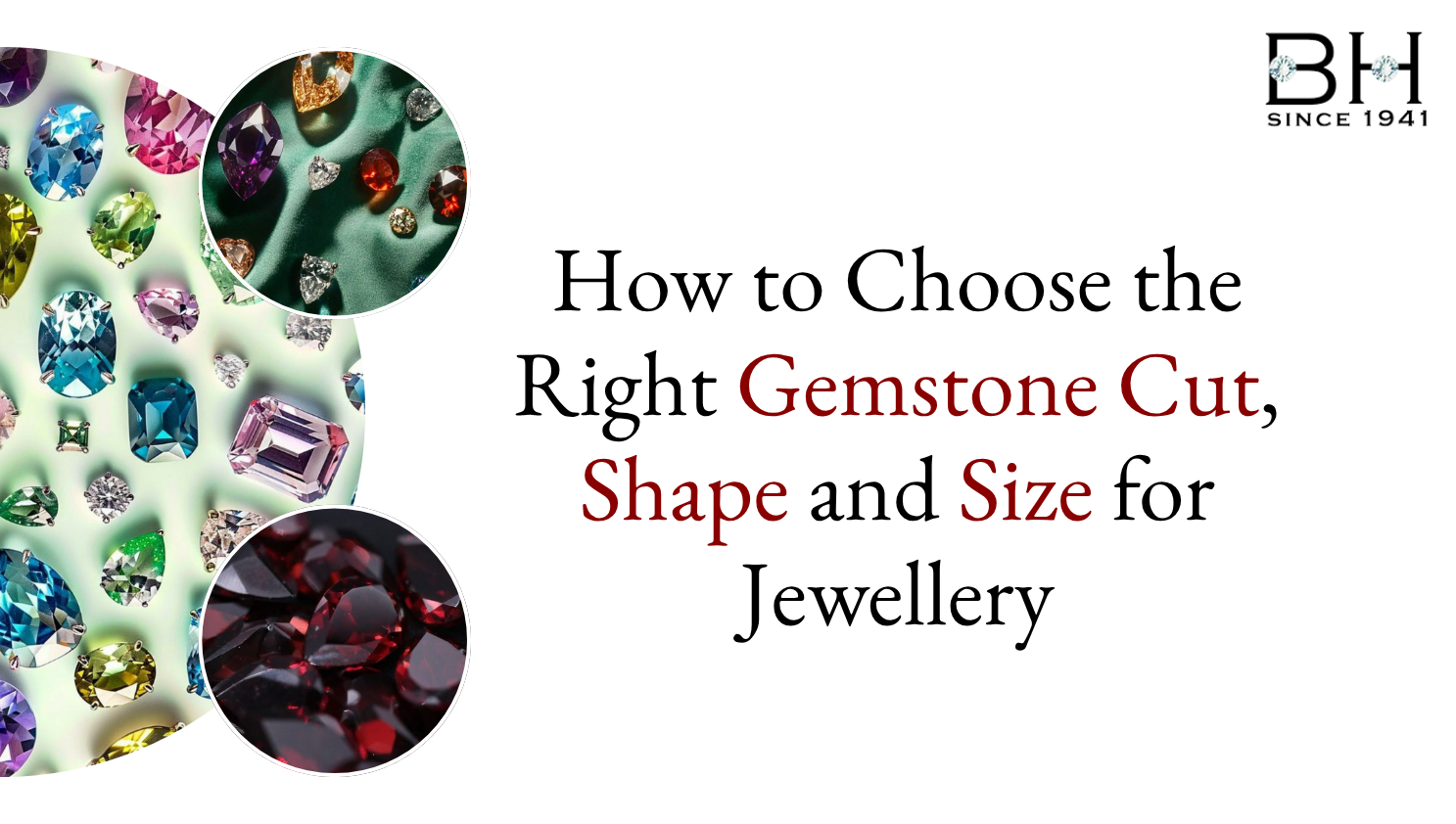
Choosing a gemstone for jewellery is about more than finding a colour you like. The way a gemstone is cut, its shape, size, and proportions can all affect how it looks once it is set into a ring, pendant, pair of earrings, or another jewellery piece.
Whether you are considering a sapphire, ruby, emerald, or another gemstone, understanding these factors can help you make a more informed choice. A beautiful gemstone should not only look appealing on its own but should also complement the jewellery design and setting.
Why Do Cut, Shape and Size Matter?
Cut, shape, and size are often used interchangeably, but they refer to different characteristics.
The cut describes how a gemstone has been faceted, polished, and proportioned to interact with light. The shape refers to the outline of the gemstone when viewed from above. The size generally refers to its weight and physical dimensions.
For example, a gemstone can have a brilliant cutting style and an oval shape. This distinction is important because the same shape can be created using different cutting styles.
These factors work together. A larger gemstone may attract attention, but a well-proportioned stone with a suitable cut can create a more balanced appearance in jewellery.
Understanding Different Gemstone Cuts
Gemstone cutting styles determine how facets are arranged across the stone and can influence how it interacts with light. The most common cutting styles include brilliant, step, and mixed cuts.
Brilliant Cut
Brilliant cuts use a facet arrangement designed to reflect light and create a bright, lively appearance. This cutting style can be used with different gemstone shapes, including round, oval, pear, and cushion.
The final appearance depends on the gemstone’s material, proportions, colour, clarity, and the way it has been cut.
Step Cut
Step cuts feature a series of parallel facets that create a clean and structured appearance. They are often associated with rectangular or octagonal outlines and can give a gemstone a sophisticated look.
This type of cut can make a gemstone’s colour and clarity more noticeable, so selecting a stone with suitable characteristics is important.
Mixed Cut
Mixed cuts combine different faceting styles to balance brilliance and other visual characteristics. They are available in several shapes and can be used to create a distinctive appearance.
Cabochon Cut
Cabochon gemstones have a smooth, polished surface rather than traditional facets. This style is commonly used for opaque or translucent gemstones and produces a softer, more traditional appearance.
The choice of cutting style should depend on the gemstone itself as well as the look you want to achieve in the finished jewellery.
Popular Gemstone Shapes for Jewellery
The shape you choose can significantly influence the overall appearance of a jewellery piece. Some popular gemstone shapes include:
Round
Round gemstones have a timeless and symmetrical appearance. They work well for rings, earrings, pendants, and other jewellery styles.
Oval
Oval gemstones offer a classic appearance while creating an elongated visual effect. They can be particularly attractive as centre stones in rings and pendants.
Cushion
Cushion shapes combine a square or rectangular outline with rounded corners. They can give jewellery a softer appearance and work well with both traditional and contemporary designs.
Pear
Pear-shaped gemstones feature a rounded end and a pointed tip. They can add an elegant and distinctive element to earrings and pendants.
Emerald
The emerald shape has a rectangular outline with trimmed corners. Its clean lines can create a sophisticated appearance and allow the gemstone itself to remain the focus.
Octagonal
Octagonal stones have a geometric appearance and are often selected when a more structured design is preferred.
The best shape ultimately depends on the jewellery design, setting, gemstone type, proportions, and personal preference.
How to Choose the Right Shape for Your Jewellery
Different jewellery pieces can benefit from different gemstone shapes.
For rings, round, oval, cushion, and emerald shapes are popular choices. If the gemstone is intended to be the centrepiece, consider how its outline will work with the setting and surrounding stones.
For earrings, round and oval gemstones can provide a balanced appearance, while pear-shaped stones can create a more distinctive look.
For pendants, elongated shapes such as oval and pear can work particularly well with vertical designs. Round and cushion shapes can complement symmetrical settings.
For bracelets, smaller gemstones are often practical, particularly when several stones are being used together.
It is also important to consider the setting before purchasing the gemstone. The dimensions of the stone should be compatible with the jewellery design to ensure a secure and well-balanced fit.
How to Choose the Right Gemstone Size
Carat weight is an important consideration, but it should not be the only factor used to determine a gemstone’s size.
Two gemstones with the same carat weight can have different physical dimensions because gemstones have different densities, shapes, and proportions. Therefore, it is useful to consider both carat weight and measurements in millimetres.
For example, a gemstone with greater depth may have a similar carat weight to a shallower gemstone but appear different when viewed from the top.
When selecting a gemstone size, consider:
- The type of jewellery
- The size of the setting
- The overall design
- Your preferred appearance
- Your budget
- The gemstone’s proportions
- The stone’s measurements in millimetres
For a statement ring, a larger centre stone may be appropriate. For everyday jewellery, a smaller gemstone may provide a more subtle and practical appearance.
The goal should be balance rather than simply choosing the largest stone available.
Carat Weight vs. Millimetre Measurements
Carat and physical size are related, but they are not the same thing.
Factor | What it tells you |
Carat weight | How much the gemstone weighs |
Millimetre dimensions | The gemstone’s actual physical measurements |
Depth | How much of the gemstone’s weight is below the top surface |
Shape | The outline and proportions of the gemstone |
Cut proportions | How the gemstone’s facets and dimensions are arranged |
The relationship between carat weight and dimensions also varies between gemstone materials because different gemstones have different densities. This means that a gemstone of a particular millimetre size does not necessarily have the same carat weight as another gemstone of the same dimensions.
For this reason, when purchasing a gemstone for a specific jewellery setting, check its measurements as well as its carat weight.
Which Gemstone Shapes Can Look Larger?
Some gemstone shapes can create a larger-looking appearance when viewed from above because of their surface area and elongated proportions.
Oval, pear, and marquise shapes can create an elongated face-up appearance, while certain deeper cuts may appear smaller from the top even when their carat weight is similar.
However, the apparent size depends on the individual gemstone’s proportions, depth, shape, and cut. Carat weight alone should not be used to predict exactly how large a gemstone will look.
If appearance is a priority, compare gemstones using their actual millimetre measurements rather than comparing carat weights alone.
Choosing Cut and Shape According to the Gemstone
Different gemstones have different physical and optical characteristics, so their ideal cut and shape can vary.
Sapphire
Sapphires are available in different colours and can be cut into a variety of shapes. When selecting natural sapphire stones, pay attention to colour, clarity, cut, dimensions, treatment, and certification.
The shape can then be selected according to the jewellery design. Oval and cushion shapes, for example, can create a traditional appearance, while more geometric shapes may suit contemporary designs.
Ruby
Ruby’s rich colour makes it a popular choice for statement jewellery. Oval, cushion, and round shapes can all work well depending on the design.
When choosing natural ruby stones, consider the intensity and distribution of colour along with clarity, cut, treatment, and certification.
Emerald
Emeralds are known for their distinctive green colour and are commonly used in rings, pendants, and earrings.
Because natural emeralds often contain inclusions, their clarity should be considered alongside colour and cut. A well-selected natural emerald stone can add character to a jewellery piece without relying solely on size.
Natural and Treated Gemstones: What Should You Know?
Before purchasing a gemstone, it is important to understand whether it is natural, treated, or synthetic.
A natural gemstone is formed through natural geological processes. A treated gemstone is natural but has undergone a treatment to improve certain characteristics. Synthetic gemstones are laboratory-created and can have properties similar to their natural counterparts.
These terms should not be assumed from appearance alone. If the gemstone’s natural status or treatment is important to your purchase, ask for appropriate documentation or a gemological certificate.
For higher-value stones, certification can provide useful information about the gemstone and help buyers understand what they are purchasing.
Also Read: Natural vs Treated Gemstones : A Buyer’s Guide to Understanding Enhancements
How to Match the Gemstone With Your Jewellery Style
The gemstone should complement the overall jewellery design rather than compete with it.
If you prefer a classic style, symmetrical shapes such as round and oval can be versatile choices. If you prefer a more contemporary appearance, geometric shapes or unusual cuts may be worth considering.
The metal used in the jewellery can also influence how the gemstone appears. Yellow gold, white gold, platinum, and other metals can create different visual effects with the same gemstone.
Think about where and how often you intend to wear the jewellery. A large statement gemstone may work well for special occasions, while a smaller, well-proportioned stone can be easier to wear regularly.
What to Check Before Buying a Gemstone
Before making a purchase, look beyond the gemstone’s appearance and consider its overall quality and documentation.
Here are a few important points to check:
- Confirm whether the gemstone is natural, treated, or synthetic.
- Check the gemstone’s carat weight and dimensions.
- Examine its colour and clarity under suitable lighting.
- Ask about treatments where applicable.
- Request certification for valuable gemstones.
- Make sure the gemstone is suitable for the intended jewellery setting.
- Purchase from a seller who provides clear information about the stone.
If you are exploring gemstone jewellery in Jaipur, choosing from best gemstone dealers in Jaipur who provide transparent information, appropriate certification, and details about the gemstone’s quality can help you make a more informed purchase rather than choosing solely on appearance or size.
Final Thoughts
Choosing the right gemstone cut, shape, and size is about finding the right balance between the stone and the jewellery design.
A gemstone with suitable proportions can complement the setting and enhance the overall appearance of the jewellery. Instead of choosing a gemstone simply because it is larger or has a higher carat weight, consider its colour, clarity, cut, dimensions, treatment, and certification.
Most importantly, select a stone that works naturally with the jewellery piece you plan to create.
Whether you are choosing a sapphire, ruby, emerald, or another gemstone, taking the time to understand these characteristics can help you make a more confident and informed jewellery decision.
FAQs
What is the difference between gemstone cut and shape?
The cut refers to how a gemstone is faceted, polished, and proportioned to interact with light, while the shape refers to its outline when viewed from above. For example, a gemstone can have a brilliant cutting style and an oval, round, cushion, or pear shape.
Does gemstone size depend only on carat weight?
No. Carat measures a gemstone’s weight, but two gemstones with the same carat weight can have different dimensions and appearances. It is useful to consider both carat weight and measurements in millimetres when choosing a gemstone.
Which gemstone shape is best for a ring?
There is no single shape that is suitable for every ring. Round, oval, cushion, and emerald shapes are commonly used, but the right choice depends on the ring design, setting, gemstone type, proportions, and the appearance you prefer.
Which gemstone shape can look the largest?
Elongated shapes such as oval, pear, and marquise can create a larger-looking face-up appearance depending on their proportions. However, the apparent size of a gemstone also depends on its depth and cut, so millimetre measurements should be considered alongside carat weight.
What is a brilliant cut gemstone?
A brilliant cut refers to a faceting style designed to reflect light and create a bright appearance. Brilliant cutting styles can be used with several gemstone shapes, including round, oval, pear, and cushion.
Should I choose a natural or treated gemstone?
The choice depends on your preferences, budget, and requirements. Natural gemstones are formed through geological processes, while treated gemstones have undergone treatments to improve certain characteristics. Before purchasing, ask about treatments and request appropriate documentation or certification where applicable.
Why is certification important when buying a gemstone?
A gemological certificate can provide useful information about a gemstone’s identity and characteristics, including details that may be important for higher-value stones. Certification can help you understand what you are purchasing before making a decision.
How do I choose the right gemstone size for my jewellery?
Consider the type of jewellery, setting size, overall design, gemstone proportions, desired appearance, and budget. Check the gemstone’s measurements in millimetres as well as its carat weight, particularly when you need it to fit a specific jewellery setting.
What should I check before buying a gemstone?
Check whether the gemstone is natural, treated, or synthetic, along with its colour, clarity, carat weight, dimensions, treatments, and certification. You should also make sure that its size and proportions are suitable for the intended jewellery setting.