
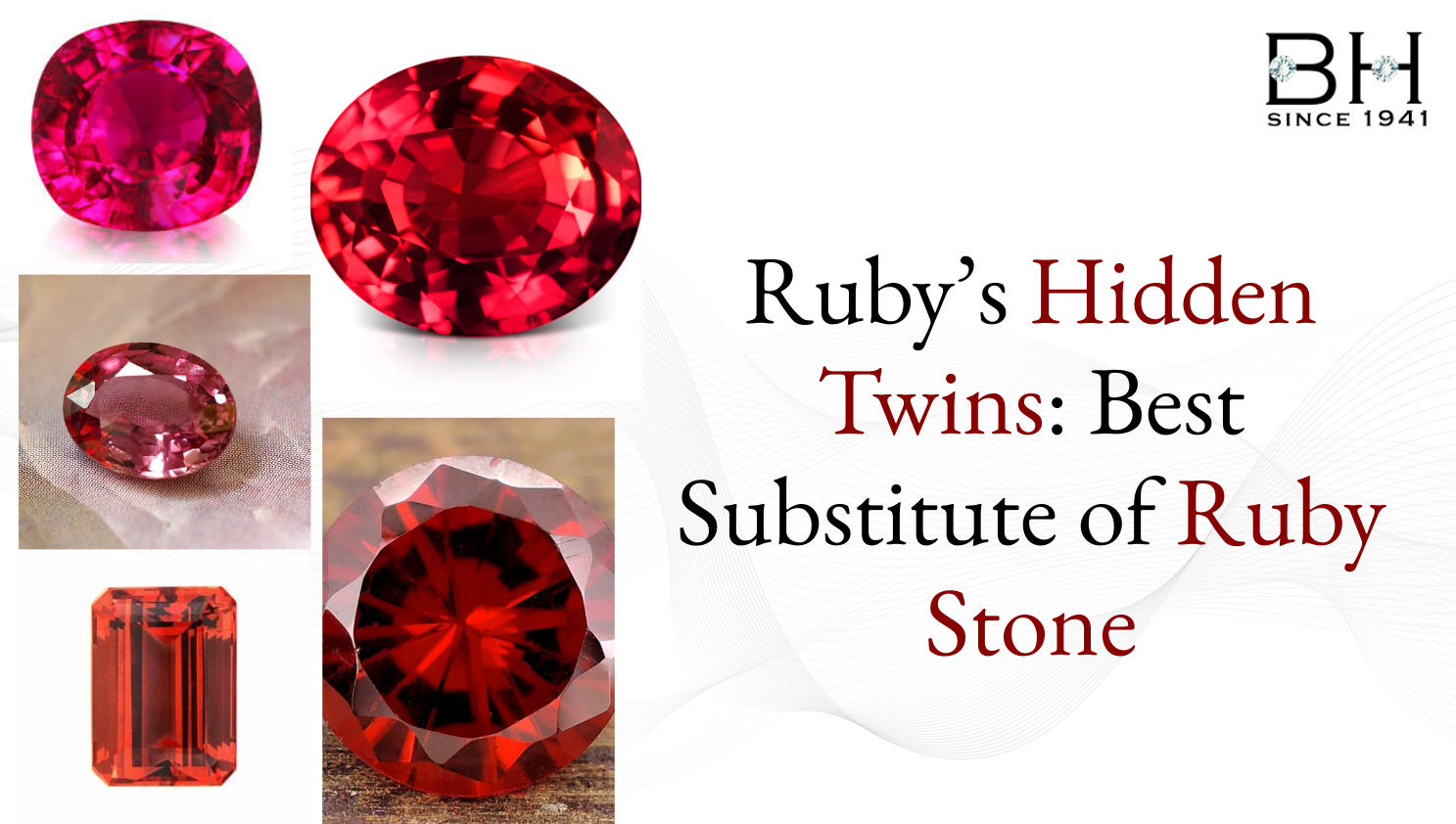
The ruby stone has long been admired for its deep red color, rarity, and symbolic connection to passion, power, and prosperity. As one of the most precious gemstones in the world, the ruby gemstone holds immense value in jewelry and gemology. However, not every red gemstone you see is a natural ruby. Several gemstones closely resemble rubies and are often chosen as the best substitute of ruby stone.
In this blog, we uncover ruby’s hidden twins—gemstones that look strikingly similar to a natural ruby and are widely considered the best substitute of ruby stone, helping you make informed choices whether you’re buying, collecting, or simply curious.
What Makes a Ruby Stone So Special?
A natural ruby belongs to the corundum family and gets its signature red color from traces of chromium. High-quality rubies are rare, durable (second only to diamonds on the Mohs hardness scale), and highly prized across cultures.
Key characteristics of a ruby gemstone include:
- Rich red to deep crimson color
- Exceptional hardness (9 on Mohs scale)
- Natural inclusions known as “silk”
- High brilliance and durability
Because of these traits, rubies are often imitated or replaced with gemstones considered the best substitute of ruby stone.
Ruby’s Hidden Twins: Best Substitute of Ruby Stone
1. Red Spinel
Red spinel is one of the closest visual matches to a ruby gemstone. Historically, many famous rubies in crowns and heirlooms were later identified as spinel. Due to its resemblance, durability, and affordability, red spinel is often regarded as the best substitute of ruby stone.
Benefits
- Naturally occurring gemstone
- High brilliance and transparency
- More affordable than natural ruby
- Durable for everyday jewelry
2. Red Garnet
Red Garnet, especially pyrope garnet, is commonly mistaken for a ruby stone due to its deep red color. While darker and less brilliant, it is frequently chosen as a budget-friendly substitute.
Benefits
- Widely available and budget-friendly
- Symbolizes protection and strength
- Suitable for daily wear
- Attractive deep red hues
3. Red Sapphire
Red sapphire belongs to the same mineral family as ruby. The difference lies in color intensity—only vivid red corundum is classified as a natural ruby, while lighter or darker reds are called sapphires.
Benefits
- High durability similar to ruby gemstone
- Natural and long-lasting
- Elegant appearance
- Ideal for fine jewelry
4. Rubellite (Red Tourmaline)
Rubellite is a red to pinkish-red variety of tourmaline that can resemble ruby at first glance. Its color may change slightly under different lighting conditions.
Benefits
- Unique color variations
- Thought to promote emotional balance
- More affordable than ruby stone
- Visually striking in jewelry designs
5. Red Topaz
Red topaz is a rare-looking gemstone often enhanced through treatment to achieve its rich reddish hue. Its brilliance and clarity can make it resemble a ruby gemstone at first glance, especially in polished cuts.
Benefits
- Excellent brilliance and sparkle
- Durable enough for regular wear
- More affordable than natural ruby
- Attractive alternative for statement jewelry
6. Tiger Eye (Red / Ox Eye)
Red tiger eye, also known as ox eye, is a heat-treated form of brown tiger eye that displays a deep reddish-brown color with a silky, chatoyant effect. While it doesn’t perfectly mimic a ruby stone, its rich red tones can cause confusion in certain settings.
Benefits
- Known for protective and grounding properties
- Unique shimmering appearance
- Budget-friendly gemstone
- Durable and easy to maintain
7. Red Zircon
Red zircon is a natural gemstone with exceptional brilliance and fire, often rivaling that of a ruby gemstone. Its bright red to reddish-brown hues and high sparkle can closely resemble a natural ruby in well-cut stones.
Benefits
- Outstanding brilliance and light reflection
- Naturally occurring gemstone
- Often confused with ruby due to sparkle
- More affordable than ruby stone
Comparison Table: Ruby vs Best Substitute of Ruby Stone
Gemstone | Hardness (Mohs) | Color | Rarity | Price Range |
Natural Ruby | 9 | Deep red to crimson | Very High | Very High |
Red Spinel | 8 | Bright red, sometimes pinkish-red | Medium | Medium |
Red Garnet | 6.5–7.5 | Dark red to brownish-red | Low | Low |
Red Sapphire | 9 | Red to slightly orange-red | High | High |
Rubellite (Red Tourmaline) | 7–7.5 | Pinkish-red to raspberry-red | Medium | Medium |
Red Topaz | 8 | Reddish-orange to pinkish-red | Medium | Medium |
Red Tiger Eye (Ox Eye) | 7 | Reddish-brown with silky chatoyancy | Low | Low |
Red Zircon | 6–7.5 | Bright red to reddish-brown | Medium | Medium |
How to Spot a “Real” Natural Ruby
If you are specifically looking for a natural ruby and not a substitute, look for these markers:
- The “Silk” Test: Under magnification, natural rubies often show “silk”—tiny, needle-like inclusions of rutile. Most look-alikes will not have these specific patterns.
- The Glow (Fluorescence): Many natural rubies (especially those from Myanmar) glow intensely red under UV light due to their chromium content.
- The Hardness: Only a diamond or a sapphire can scratch a ruby. If the stone shows surface scratches or “abraded” facet edges, it’s likely a softer look-alike like garnet.
Also read: Top 10 Astrological Benefits of wearing Ruby Gemstone
Why Choose a Ruby Stone?
While the look-alikes are beautiful, the ruby stone is prized for more than just its color. In many cultures, it is the stone of the Sun, believed to bring:
- Vitality & Leadership: Known as the “King of Gems” (Ratnaraj), it is said to boost confidence and authority.
- Protection: Historically worn by warriors to protect against negative energy.
- Heart Health: Many believe it aids in blood circulation and emotional healing.
Conclusion
Many gemstones resemble a ruby gemstone, and several are considered the best substitute of ruby stone, but none truly replace the timeless beauty, rarity, and prestige of a natural ruby stone. Understanding ruby’s hidden twins allows you to make confident, informed decisions based on your budget, purpose, and preference.
Whether you choose a natural ruby stone or its best substitute, knowledge ensures lasting satisfaction. Always rely on trusted sources offering certified gemstones and expert guidance to ensure quality and authenticity.
Frequently Asked Questions (FAQs)
1. What is the best substitute of ruby stone?
Red spinel is considered the best substitute of ruby stone due to its similar color, brilliance, and durability.
2. What is a cheaper alternative to a natural ruby stone?
Red spinel, red garnet, rubellite, red topaz, and red zircon are popular, more affordable alternatives.
3. How can I tell if a ruby is real?
Look for silk inclusions, red fluorescence under UV light, and high hardness (9 on Mohs scale).
4. Are red sapphires the same as rubies?
They are from the same mineral family, but only vivid red corundum is called a ruby; others are sapphires.
5. Which gemstone looks most like a ruby?
Red spinel is the closest match in color and clarity.
6. Can ruby look-alikes be used in jewelry?
Yes, many are durable and suitable for everyday wear or statement pieces.
7. Why choose a natural ruby stone over look-alikes?
For rarity, cultural significance, durability, and long-term value.
8. Where can I buy certified natural ruby stones?
Always buy from trusted sources offering certified gemstones and expert guidance.